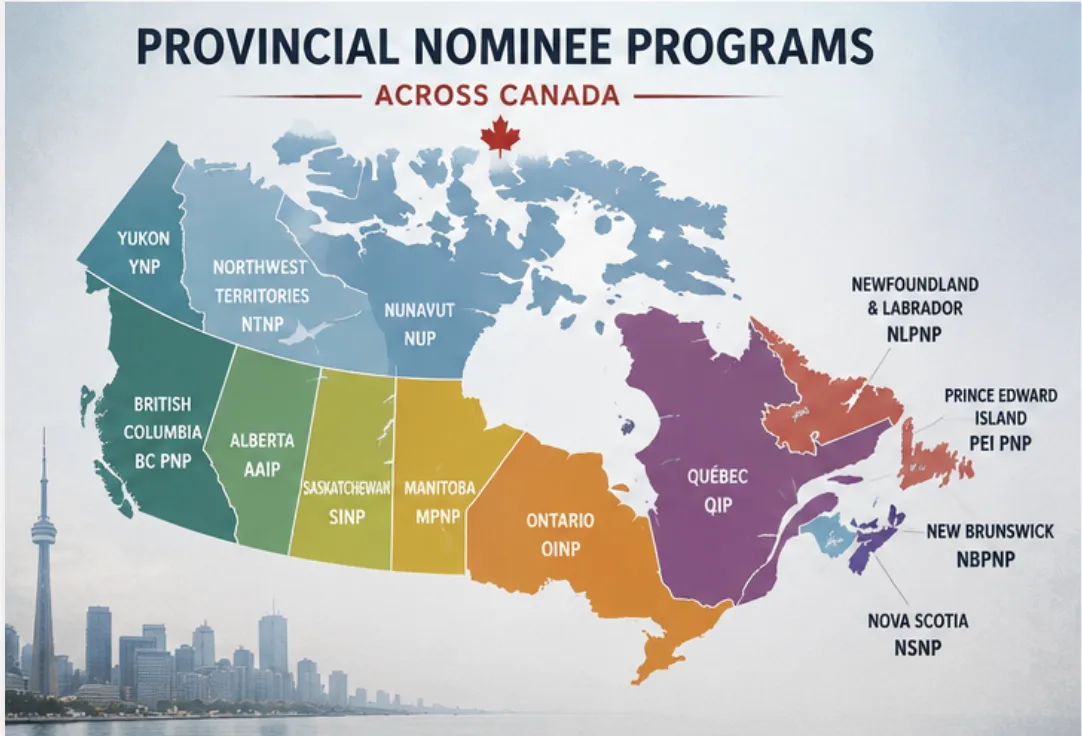
Canada’s Provincial Nominee Program (PNP) provides an important pathway to Canadian permanent residence for foreign nationals who have the skills, education, work experience, or business background required by a particular province or territory.
While Canada’s federal government, through Immigration, Refugees and Citizenship Canada (IRCC), manages the country’s overall immigration system, participating provinces and territories operate their own nominee programs designed to address regional economic and labour-market needs.
Through a Provincial Nominee Program, a province or territory can nominate eligible individuals who have demonstrated the ability and intention to establish themselves economically and contribute to the local community. The eligibility requirements, application procedures, occupations targeted, and selection criteria vary between provinces and territories.
For individuals, understanding the available PNP pathways can be an important part of developing a successful Canadian immigration strategy.

How Does the Provincial Nominee Program Work?
Provincial Nominee Programs allow participating provinces and territories to nominate individuals for permanent residence based on their specific economic and demographic requirements.
PNP streams may target:
Skilled workers
International graduates
Foreign workers with qualifying job offers
Entrepreneurs and business owners
Professionals in specific occupations
Candidates with provincial work experience
Candidates with family or community connections
Express Entry candidates who meet provincial selection criteria
A provincial nomination may be obtained through an Express Entry-linked stream or through a non-Express Entry provincial stream, depending on the program.
For candidates receiving a nomination through an Express Entry-aligned Provincial Nominee Program, the nomination can provide 600 additional Comprehensive Ranking System (CRS) points. This can significantly increase the candidate’s likelihood of receiving an Invitation to Apply (ITA) for permanent residence through Express Entry.
Because provincial immigration programs and eligibility requirements can change, applicants should carefully review the current requirements before submitting an application.
Ontario Immigrant Nominee Program (OINP)
The Ontario Immigrant Nominee Program (OINP) is Ontario’s provincial immigration program. It allows the province to nominate eligible foreign nationals for permanent residence based on Ontario’s labour-market and economic needs.
Ontario offers immigration pathways for individuals with skilled work experience, international graduates, qualifying job offers, and eligible business backgrounds.
OINP pathways have included categories such as:
Ontario’s Express Entry-related streams
Employer Job Offer streams
International Graduate pathways
Entrepreneur and business-related pathways
The availability and eligibility requirements of individual streams may change over time, and some streams may open or close depending on Ontario’s nomination allocation and labour-market priorities.
Ontario Express Entry Streams
Ontario has operated Express Entry-linked immigration streams designed to identify candidates in the fed
eral Express Entry pool who meet specific provincial criteria.
One of the best-known pathways is the Human Capital Priorities Stream, which has historically allowed Ontario to consider Express Entry candidates with qualifying education, skilled work experience, language proficiency, and other factors.
Ontario may issue a Notification of Interest (NOI) to selected Express Entry candidates. Receiving an NOI does not itself grant permanent residence. The candidate must then submit a provincial nomination application and satisfy all applicable OINP requirements.
Ontario may also conduct targeted selections based on labour-market priorities, including occupations in technology and other sectors identified by theprovince.
Applicants should not rely on historical CRS thresholds or past invitation patterns when assessing their eligibility, as Ontario’s selection criteria and priorities may change.
 French-Speaking Skilled Worker Pathway
Ontario has also offered immigration pathways for French-speaking skilled workers through its Express Entry-linked programs.
Candidates may need to demonstrate strong French-language proficiency and meet specified English-language requirements, in addition to satisfying education, work experience, Express Entry, and other eligibility criteria.
This pathway may be particularly relevant for qualified bilingual professionals who wish to establish themselves permanently in Ontario.
International Graduate Pathways
Ontario has offered pathways for eligible international graduates who have completed qualifying studies in Ontario.
Depending on the specific stream and current program rules, eligible graduates may include individuals who have completed:
A master’s degree from an eligible Ontario university; or
A doctoral (PhD) degree from an eligible Ontario university.
Eligibility may depend on factors such as the institution attended, timing of graduation, residency, language proficiency, and other program-specific requirements.
Applicants should verify the current requirements before applying, as provincial graduate streams can be subject to changes and intake limitations.
Employer Job Offer Category
Ontario’s Employer Job Offer pathways are designed to allow eligible Ontario employers to support the nomination of qualified foreign workers and international graduates.
Depending on the specific stream, applicants may require:
A qualifying job offer from an Ontario employer
Appropriate work experience
Relevant education or training
Language proficiency
Legal status in Canada, where applicable
A genuine intention to live and work in Ontario
The employer and the offered position must also satisfy applicable OINP requirements.
Entrepreneur and Business Immigration
Ontario’s business immigration pathways have been designed to attract entrepreneurs interested in establishing or purchasing a business in the province.
Depending on the program requirements in effect at the time of application, eligible entrepreneurs may need to demonstrate:
Relevant business experience
A qualifying personal net worth
A viable business plan
A qualifying investment
Active management of the business
Job creation for Canadian citizens or permanent residents
An intention to establish and operate the business in Ontario
Business immigration applications can involve complex financial, legal, and operational requirements. Professional advice can help applicants understand whether a particular business immigration pathway is appropriate for their circumstances.
New Brunswick Provincial Nominee Program (NBPNP)
The New Brunswick Provincial Nominee Program (NBPNP) provides immigration pathways for individuals whose skills, education, work experience, and other qualifications align with the province’s economic and labour-market needs.
New Brunswick has offered immigration pathways for categories such as:
Express Entry candidates
Skilled workers with employer support
Entrepreneurial applicants
International graduates
Candidates with qualifying connections to New Brunswick
Other targeted immigration initiatives
Program availability and eligibility criteria may change according to provincial priorities.
New Brunswick Express Entry Pathway
The New Brunswick Express Entry pathway is intended for eligible candidates who have the skills, education, and work experience needed to contribute to the province’s economy and who genuinely intend to live and work in New Brunswick.
Depending on the stream and current intake rules, candidates may be required to:
Maintain an active federal Express Entry profile
Meet applicable federal Express Entry requirements
Demonstrate qualifying work experience
Meet language requirements
Have an eligible connection to New Brunswick or satisfy specific provincial selection criteria
New Brunswick may also conduct targeted selections based on provincial labour-market needs.
Atlantic Immigration Program (AIP)
The Atlantic Immigration Program (AIP) is an employer-driven immigration pathway designed to help participating Atlantic Canadian provinces attract and retain skilled foreign workers and international graduates.
The program covers four Atlantic provinces:
New Brunswick
Newfoundland and Labrador
Nova Scotia
Prince Edward Island
Unlike traditional provincial nomination pathways, the Atlantic Immigration Program is based on participation by designated employers.
Eligible candidates generally require a qualifying job offer from a designated employer and must complete an individualized settlement plan. The program is intended to support the long-term settlement of successful applicants and their eligible family members in Atlantic Canada.
Depending on the applicant’s circumstances, the program may also provide a pathway to Canadian permanent residence.
Alberta Advantage Immigration Program (AAIP)
The Alberta Advantage Immigration Program (AAIP) is Alberta’s provincial immigration program. It provides pathways for eligible foreign workers, entrepreneurs, and other qualified applicants who meet Alberta’s economic and immigration priorities.
Alberta’s immigration pathways may include:
Alberta Opportunity Stream
Alberta Express Entry Stream
Rural or community-focused pathways
Entrepreneur and business pathways
Other targeted immigration initiatives
The exact streams and eligibility criteria can change as Alberta updates its immigration priorities.
Alberta Express Entry Pathway
The Alberta Express Entry pathway is linked to the federal Express Entry system.
Eligible candidates must generally have an active Express Entry profile and meet the requirements of the applicable Alberta pathway.
Alberta may select candidates based on factors such as:
Occupation and work experience
Alberta job offer or employment
Previous work experience in Alberta
Education in Alberta
Family connections in Alberta
Other factors supporting the province’s economic priorities
Applicants should review the current AAIP selection criteria rather than relying on historical CRS thresholds or previous invitation rounds.
Nova Scotia Nominee Program (NSNP)
The Nova Scotia Nominee Program (NSNP) provides immigration pathways for eligible individuals whose skills and experience meet the province’s economic and labour-market needs.
Nova Scotia’s immigration pathways may include streams for:
Express Entry candidates
Skilled workers
Physicians
Entrepreneurs
International graduate entrepreneurs
Candidates in targeted occupations
Individuals selected according to provincial labour-market priorities
The availability of individual pathways and their eligibility requirements may change over time.
Nova Scotia Express Entry Pathways
Nova Scotia has used Express Entry-linked pathways to select candidates who meet specific provincial priorities.
Depending on the stream, applicants may need to demonstrate:
Skilled work experience
Language proficiency
Education
Qualifying employment
A connection to Nova Scotia
Other factors established by the province
Nova Scotia Labour Market Priorities
The Labour Market Priorities pathway allows Nova Scotia to target Express Entry candidates who meet specific labour-market needs identified by the province.
The occupations and selection criteria may change between invitation rounds. Candidates should therefore review the current requirements before taking steps toward an application.
Physician Pathway
Nova Scotia also offers immigration pathways for eligible physicians who meet the province’s requirements and have qualifying employment arrangements.
Internationally trained physicians may need to satisfy specific licensing, employment, and immigration requirements.
Skilled Worker Pathway
The Skilled Worker pathway is designed for eligible individuals who have a qualifying job offer from a Nova Scotia employer.
Depending on the applicant’s occupation and circumstances, skilled, semi-skilled, and other eligible workers may be considered under the applicable requirements.
Entrepreneur Pathway
The Entrepreneur pathway is intended for experienced business owners and senior managers who wish to establish or acquire and actively operate a business in Nova Scotia.
Applicants may need to demonstrate business experience, investment capacity, and a genuine intention to settle in the province.
International Graduate Entrepreneur Pathway
This pathway is intended for eligible international graduates who have studied in Nova Scotia and have qualifying experience operating a business in the province.
Applicants must meet the applicable education, business ownership, operational, and settlement requirements.
Saskatchewan Immigrant Nominee Program (SINP)
The Saskatchewan Immigrant Nominee Program (SINP) provides pathways for qualified foreign nationals whose skills and experience align with Saskatchewan’s labour-market and economic needs.
The SINP has offered immigration pathways for:
International skilled workers
Saskatchewan residents and workers
Entrepreneurs
Farmers
International graduate entrepreneurs
Successful provincial nominees may then apply to IRCC for Canadian permanent residence, subject to federal admissibility requirements.
Saskatchewan Express Entry Pathway
The Saskatchewan Express Entry pathway is intended for eligible candidates who have an active federal Express Entry profile and meet the requirements of the applicable SINP category.
Depending on the stream, applicants may need to satisfy criteria related to:
Education and training
Skilled work experience
Language proficiency
Age
Connection to Saskatchewan
Labour-market adaptability
Historically, Saskatchewan’s International Skilled Worker Expression of Interest system has used a points-based assessment. However, applicants should always review the current SINP requirements and selection criteria, as program rules and invitation procedures may change.
How an Immigration Lawyer Can Help With a Provincial Nominee Application
Provincial Nominee Program applications can involve multiple stages and detailed eligibility requirements. A mistake in assessing eligibility, preparing documentation, or submitting an application may have serious consequences.
An experienced immigration lawyer can assist with:
Assessing your eligibility for provincial immigration pathways
Identifying suitable PNP options
Reviewing your Express Entry profile
Evaluating your education and work experience
Reviewing language test results
Assessing job offers and employer requirements
Preparing and reviewing supporting documents
Responding to procedural issues
Advising on provincial nomination applications
Assisting with the federal permanent residence application
Addressing refusals or other immigration concerns
 Quebec Immigration
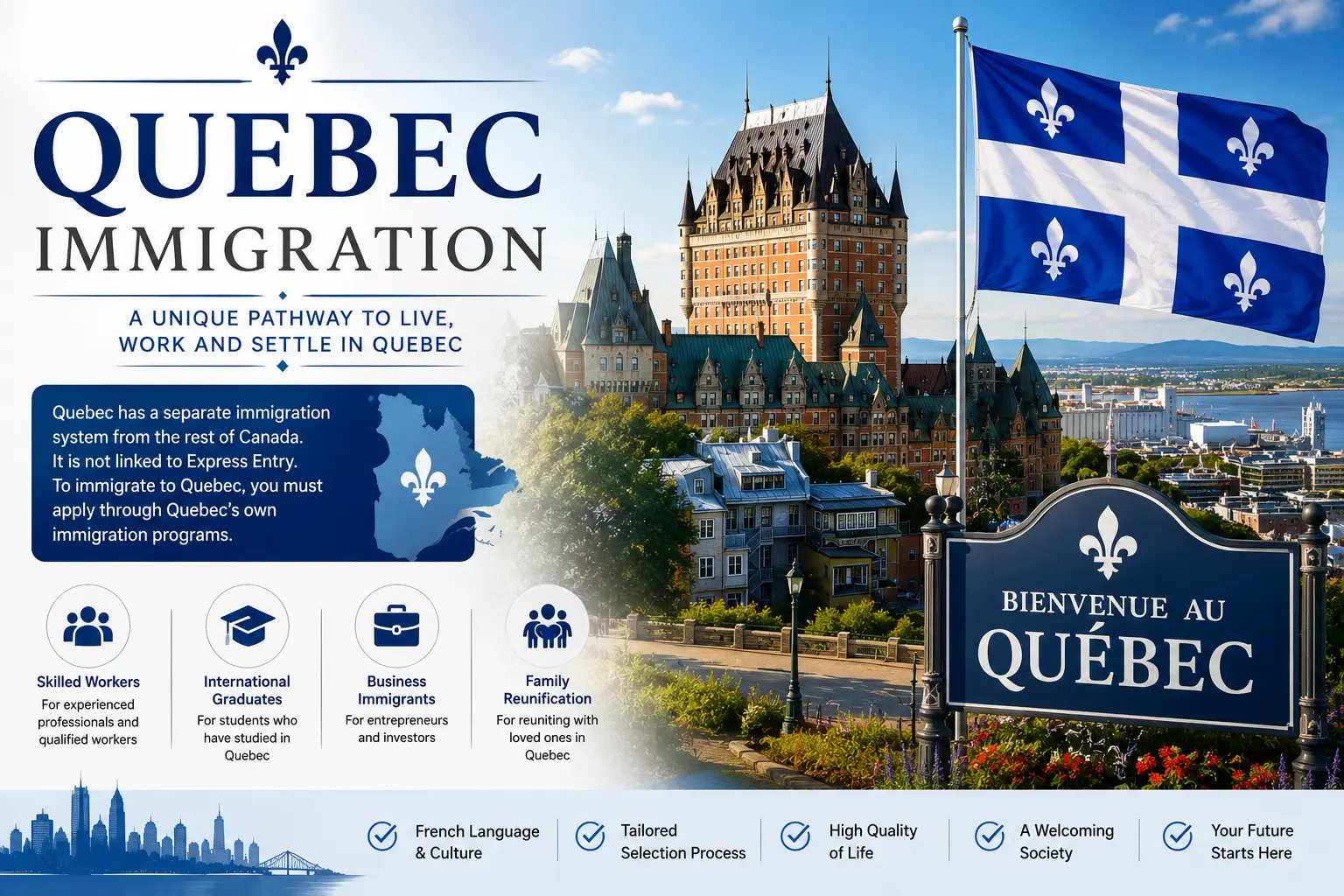
Quebec operates a separate immigration system from the federal Express Entry system and has its own immigration programs and selection procedures.
Individuals interested in immigrating to Quebec generally need to follow Quebec’s immigration process before proceeding with the federal permanent residence process, where applicable.
Because Quebec’s immigration requirements, selection criteria, and application procedures differ from those of other Canadian provinces, applicants should obtain professional guidance based on their individual circumstances.